A good resume lands an interview, but it doesn’t promise to land you a good job. This is a gap that a surprising number of sales candidates never fully bridge, and it costs them roles they are genuinely qualified for.
Sales hiring managers today are under enormous pressure to make the right call. One bad sales hire can drain revenue, waste management bandwidth, and restart the entire hiring cycle from scratch. So when they evaluate candidates, they look for evidence of real performance instead of just good resumes.
If you are a sales professional, understanding what hiring managers look for in sales reps beyond the resume is one of the most important things you can do for your career. This blog breaks it down, honestly and in full. Let’s dive in.
The Resume Is Just the Starting Point
Most sales professionals spend a lot of time perfecting their resumes, but the thing is, it only gets you in the interview room.
Because here is the uncomfortable truth: resumes in sales are notoriously unreliable.
A Forbes study found that 70% of workers admit to lying on their resumes, with 37% of those saying they lie frequently. In a field like sales, where performance is measurable, this creates a serious credibility problem for everyone, including the honest high performers who get lumped in with inflated claims.
Hiring managers know this. They account for it. And they spend most of the hiring process trying to separate fact from fiction. That is why strong candidates need to walk in prepared to demonstrate proof, not just promise.
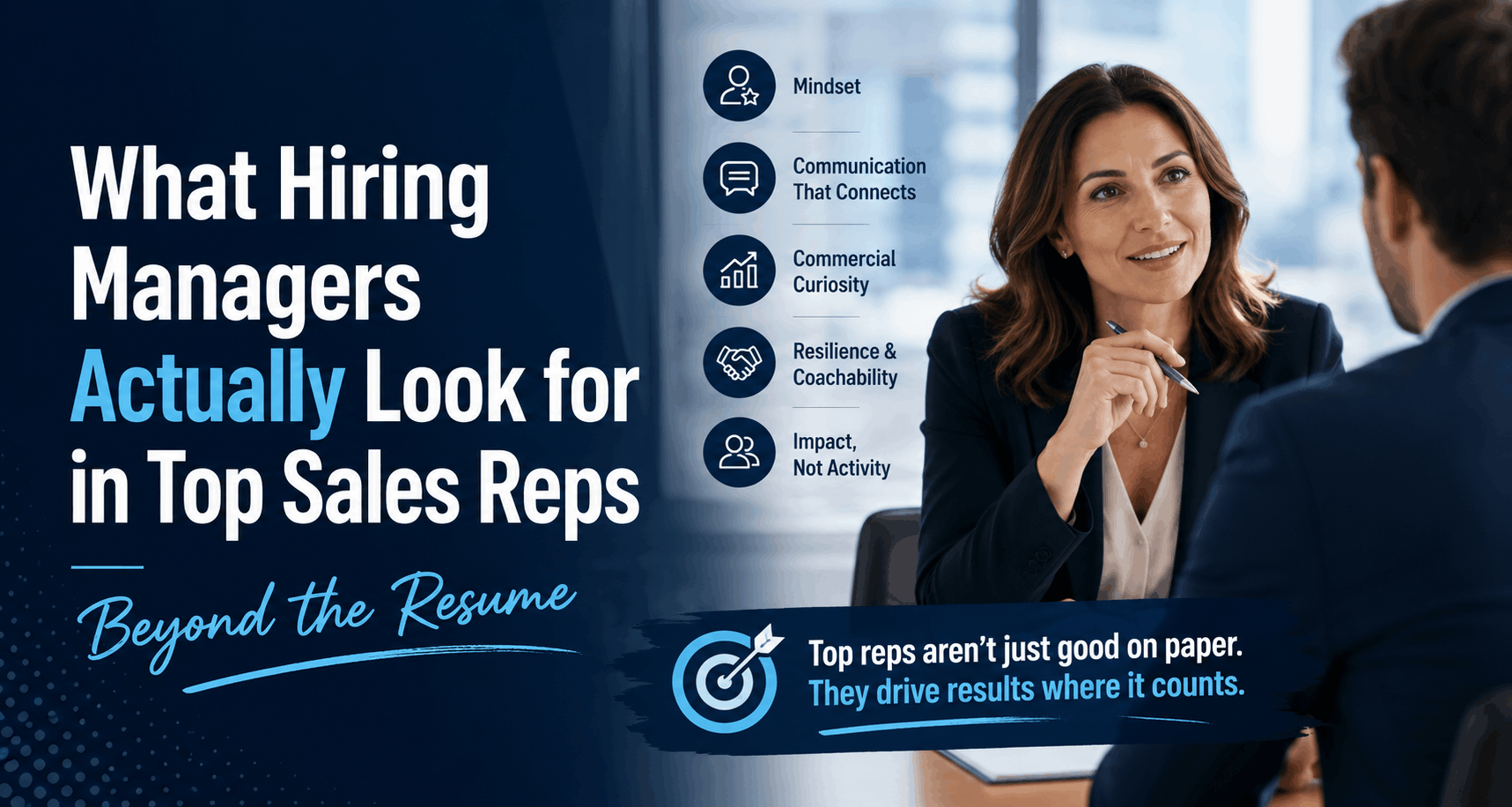
5 Things That Hiring Managers Look For In Top Sales Reps
1. Verified Performance Data Speaks Louder Than Claims
When it comes to sales hiring criteria, nothing carries more weight than verified performance data. Hiring managers want to know: Did you actually hit your quota? How consistently? Against what kind of benchmark?
Saying "I exceeded quota every quarter" is easy. Proving it with verified W-2 earnings, multi-source performance data, and benchmarked quota attainment is a different thing entirely. That kind of credibility is rare, and it stands out immediately.
This is precisely the gap that platforms like Proven Reps are built to close. Rather than relying on self-reported claims, we authenticate a candidate's actual track record using multiple data sources and proprietary benchmarking. The result is a verified performance profile that gives hiring teams the confidence to make faster, smarter decisions.
If you want to understand how this works from a candidate perspective, explore how proven reps work for sales candidates.
2. Quota Attainment in Context, Not Just on Paper
Hitting 100% of a low quota in a warm territory is very different from hitting 85% of an aggressive quota in a competitive vertical. Hiring managers understand this nuance. What they struggle with is having any reliable data to make the comparison.
This is why quota context matters as much as quota attainment itself. The best candidates come prepared to explain the full picture: the size of their territory, the difficulty of their targets, the competitive landscape they were operating in, and the tools and support they had access to. Raw numbers without context can mislead. Numbers in context tell a real story.
3. Genuine Coachability and Self-Awareness
Among the qualities of top salespeople that rarely get discussed openly, coachability ranks near the top of most hiring managers' priority lists. Not because top performers need a lot of hand-holding, but because the sales landscape changes constantly and the best reps adapt.
Self-awareness is also a factor that hiring managers are actually looking for during interviews. Can you articulate a deal you lost and explain what you learned from it? Can you identify a skill gap you have actively worked to close? Can you describe how your approach has evolved over time?
Candidates who project an image of flawless, unbroken success often raise red flags rather than inspire confidence. Nobody wins every deal. Hiring managers know that. What separates strong candidates from average ones is the ability to reflect honestly and demonstrate growth.
This kind of self-awareness also signals how a new hire will respond to feedback, integrate into a team, and handle the inevitable pressure of a ramp period.
4. Cultural Fit Is Real, and It Has Data Behind It
"Cultural fit" gets dismissed sometimes as a vague excuse for subjective decisions. But in sales hiring, culture alignment has concrete implications for performance and retention. And hiring managers who have been burned by this before actively screen for it.
A sales rep who thrives in a high-autonomy, outbound-heavy startup environment may struggle in a structured, process-driven enterprise sales team.
What they are looking for is alignment across a few key dimensions: How do you prefer to be managed? Do you thrive in collaborative environments, or do you work better with independence? What motivates you beyond compensation? What does a great sales culture look like to you?
There are no universally right answers. But candidates who can speak honestly about their preferences and demonstrate self-awareness about where they do their best work show hiring managers that they are thinking about the role seriously.
5. Relationship-Building Skills
For roles with a significant account management or renewal component, hiring managers are looking closely at relationship-building capabilities. Closing a deal is one data point. Retaining a client, expanding a contract, and earning referrals is another category entirely.
Candidates who can speak to long-term client relationships, low churn rates in their book of business, or strong NPS scores from clients they managed carry a different kind of credibility. They are not just hunters. They are builders.
This also extends internally. How you build relationships across an organization reflects how you will operate on a sales team. Do you collaborate with marketing? Do you loop in solutions engineering early in complex deals? Do you maintain relationships with customer success after the close?
These patterns matter to hiring managers who have seen reps treat the sale as the finish line rather than the starting line.
What Hiring Managers Will Not Tell You Directly
Hiring managers are often just as frustrated by the process as candidates are. They know resumes lie. They know interviews are performative. They know that the gut-feel approach to hiring leads to expensive mistakes.
A report from Accord highlights that top sales performers generate approximately 2.6 times greater ROI than their peers. That number captures exactly what is at stake in every hiring decision. Missing a sales hire is not a minor setback. It costs real revenue and real growth.
This is why the industry is shifting toward verified performance data as the new standard. Hiring managers want candidates who can prove what they have done, not just claim it. The ones who can close that credibility gap are the ones who consistently win competitive offers.
If you are wondering why strong performers still struggle to get recognized, our blog on Why Top Sales Reps Struggle to Stand Out goes deeper into the systemic issue at play.
How to Bridge the Gap Between What You Have Done and What They Need to See
Here are some concrete shifts that separate candidates who get offers from those who get politely declined after three rounds:
- Bring specific, contextualized numbers. Do not say "exceeded quota." Say what percentage, against what target, in what market conditions.
- Prepare to discuss losses. Identify one or two deals you lost, what happened, and what you would do differently. This signals maturity and self-awareness.
- Speak your process out loud. Walk the interviewer through how you would approach the first 30, 60, and 90 days. Show that you have thought about execution, not just opportunity.
- Get verified before you apply. A performance-verified profile removes the skepticism that follows every claim you make. It shifts the conversation from "can I trust this?" to "how do we move forward?"
Conclusion: Proof Is the New Differentiator in Sales Hiring
The sales hiring industry has a credibility problem. Candidates make inflated claims, hiring teams make expensive guesses, and the best performers often get lost in a sea of identical resumes. That cycle does not have to continue.
The professionals who will win the best roles in the next few years are not necessarily the ones with the most impressive raw numbers. They are the ones who can prove what they have done, communicate how they did it, and show that their results are real and repeatable.
If you are ready to stop competing on claims and start competing on proof, Proven Reps gives you the platform to do exactly that. Verified performance. Authenticated track record. Real credibility, built on real data.